Skip to end of metadata
Go to start of metadata

Раздел Персоны содержит список всех пользователей системы. Чтобы создать нового пользователя, нажмите кнопку Создать пользователя.
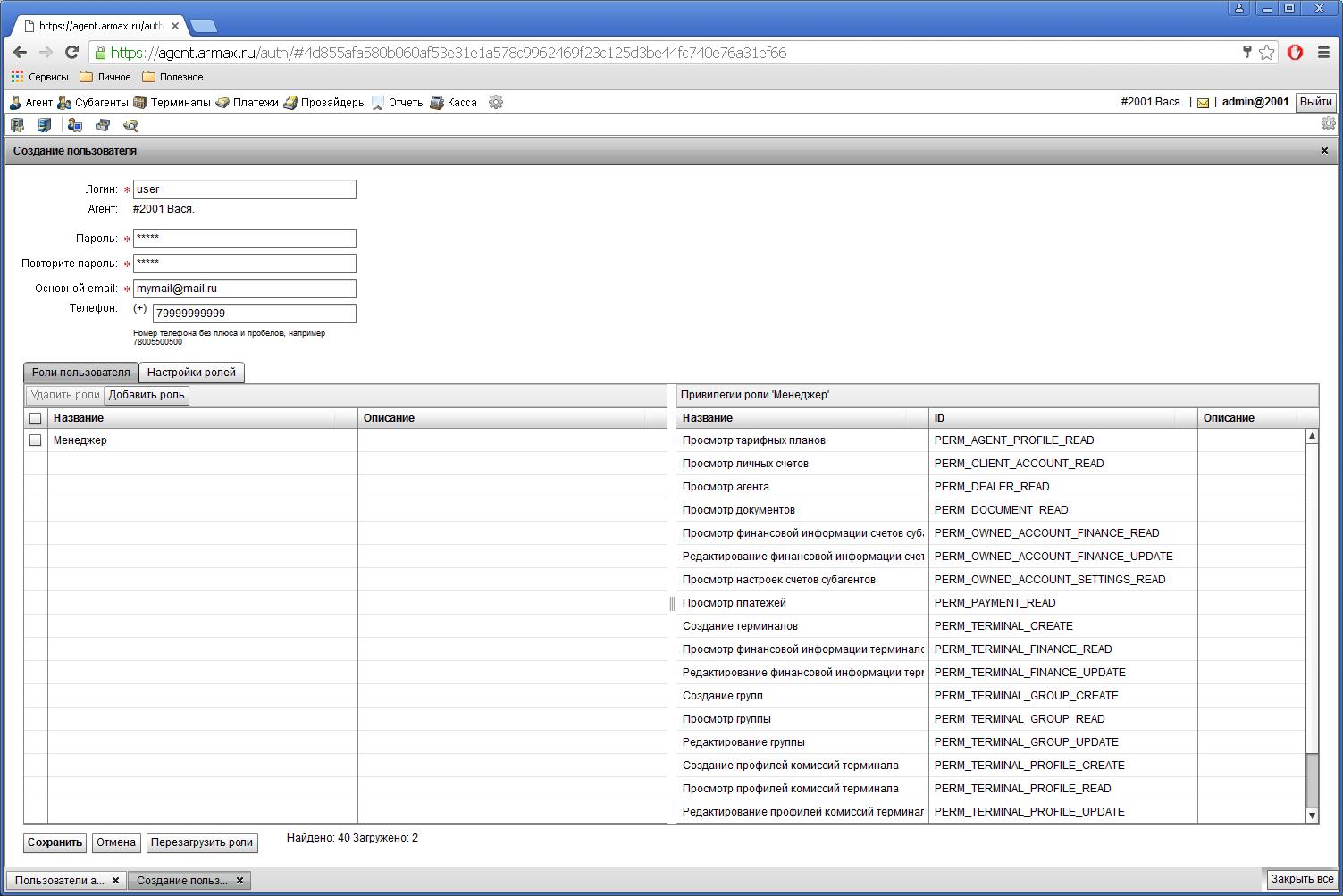


Кабинет агента. Создание нового пользователя


При создании нового пользователя указывается его логин в системе, пароль и адрес электронной почты. Номер телефона обязательно указывать для тех пользователей, которым разрешена регистрация терминала, так как перед выполнением регистрации необходимо выбрать пользователя, которому будет отправлено SMS-сообщение с одноразовым паролем. Также у пользователя необходимо добавить хотя бы одну роль. Чтобы добавить роль к пользователю, нажмите кнопку «Добавить роль», в открывшемся окне со списком доступных ролей выберите ту, что хотите добавить этому пользователю. Справа от роли перечислены все привилегии (разрешения) пользователя.


На вкладке Настройка ролей настраивается, на какую часть сети агента распространяется роль пользователя.  В первой колонке таблицы перечислены варианты, для которых можно настроить роль:

  • ·имя агента — вся сеть агента, со всеми терминалами;
  • ·все агенты — все субагенты текущего агента;
  • ·вся сеть агетов — все субагенты текущего агента, их субагенты, то есть субагенты всех уровней;
  • ·все группы — все группы терминалов;
  • ·все вложенные группы — все группы терминалов с подгруппами всех уровней;
  • · далее перечислены отдельные субагенты и группы терминалов.
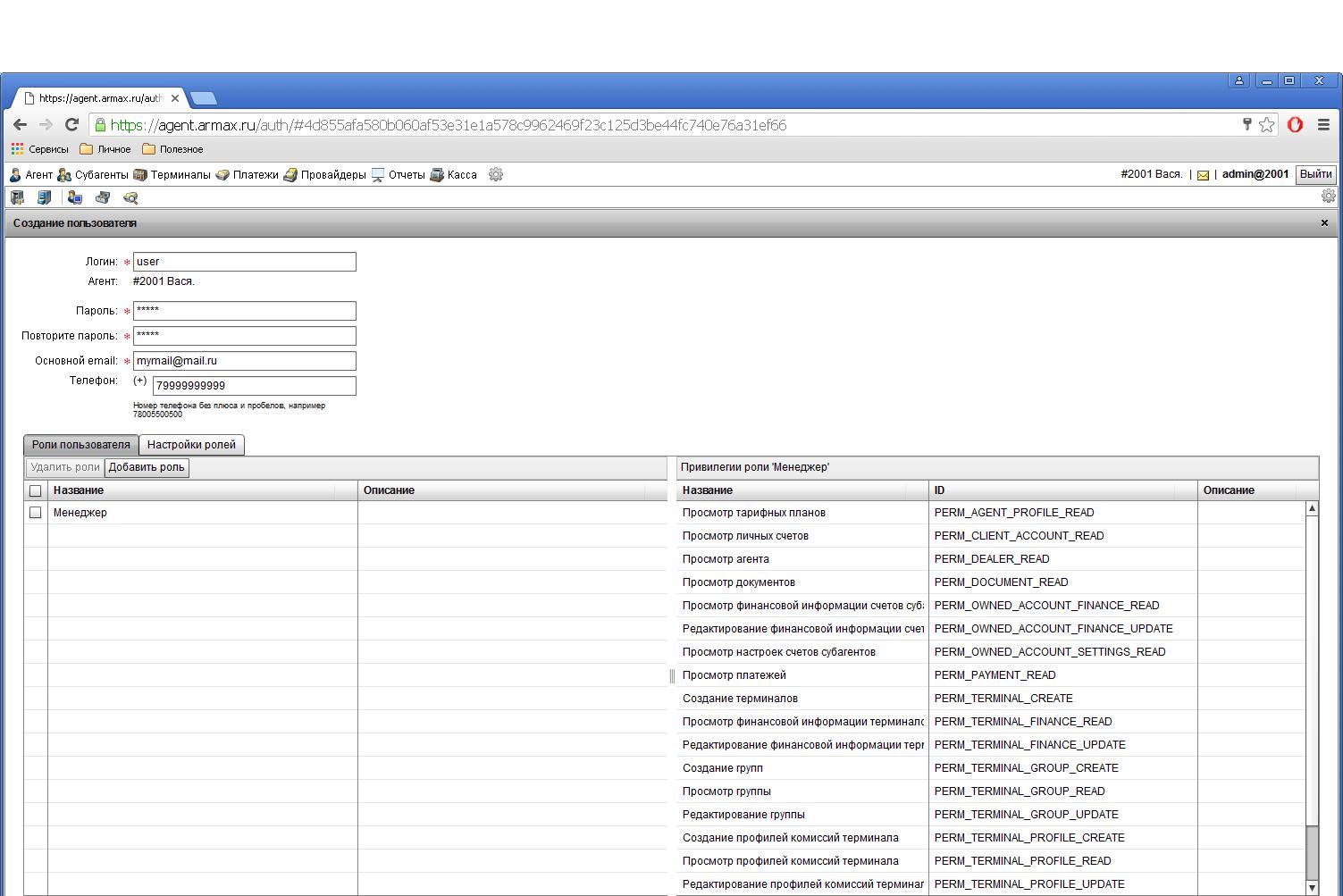
 

Далее в Настройках ролей идут колонки с ролями пользователя. В каждой колонке напротив напротив подраздела агентской сети можно выставить одно из значений:


  ·разрешено    — привилегии роли распространяются на эту группу;


запрещено  — привилегии роли не распространяются на эту группу, даже если они устрановлены на раздел, включающий эту группу;


не установлено ничего — привилегии роли не распространяются на эту группу, если только не установлен разрешающий флаг на раздел, включающий эту группу. 

 Например, если требуется разрешить пользователю оперировать всеми субагентами агента, кроме одного, то выставляется флаг «Разрешено» напротив значения Вся сеть агентов и флаг «Запрещено» напротив строки с указанием этого конкретного субагента.

  • No labels

1 Comment

  1. Anonymous

    A sound level meter is a device specifically designed to measure sound levels in various environments check sound meter online. It quantifies sound pressure levels, providing crucial data for applications ranging from industrial noise monitoring to occupational safety assessments. Understanding how to use a sound level meter is increasingly essential in our noise-polluted world, making it an invaluable tool for ensuring compliance with regulations and safeguarding health. In this article, we will explore the functionality of sound level meters, their applications across different sectors, relevant regulations, potential challenges, future trends, and address some frequently asked questions.

    IUnderstanding Sound Level Meters

    What is a sound level meter?

    A sound level meter is an instrument used to measure the intensity of sound in decibels (dB). It captures sound pressure levels generated by various sources, allowing users to assess and record the loudness of sound in a given environment. These readings can help in identifying excessive noise levels that may lead to health issues or disturbances.

    Key components of a sound level meter

    The key components of a sound level meter include a microphone, signal processor, and display. The microphone captures sound waves, the signal processor analyzes these waves and converts them into electrical signals, and the display shows the resulting sound level readings in decibels.

    Types of sound level meters

    Sound level meters can be classified into several types based on features and applications. Analog meters provide continuous readings on a dial, while digital sound level meters offer numerical displays and often advanced features like data logging. Portable sound level meters are used for on-site measurements, while fixed sound level meters are installed for continuous monitoring in specific locations.

    How Sound Level Meters Work

    Principle of sound measurement

    Sound level meters measure sound pressure levels generated by sound waves. These waves hit the microphone, causing it to vibrate. This vibration is converted into an electrical signal, which is then processed to provide a decibel reading. This fundamental principle enables the assessment of sound intensity in diverse environments.

    Calibration and accuracy

    Calibration is essential for ensuring accuracy in sound level measurements. Regular calibration against known reference standards helps maintain the integrity of sound level meters, allowing them to provide reliable readings. Calibration processes involve adjusting the meter to account for variations in environmental conditions, ensuring its functionality remains precise over time.

    Display and interpretation of sound levels

    Sound level meters feature displays that indicate sound levels in decibels. These can be Peak, Leq (Equivalent Continuous Sound Level), or Lmax (Maximum Sound Level) measurements, which provide valuable insights for users. Understanding these readings facilitates informed decision-making regarding noise control and reduction strategies.

    Applications of Sound Level Meters

    Industrial use

    In industrial settings, sound level meters are vital for monitoring noise levels in factories and workplaces. By assessing these levels, companies can implement strategies to minimize excessive noise, thereby protecting their workers' hearing and ensuring compliance with occupational safety standards.

    Environmental monitoring

    Sound level meters play a crucial role in environmental monitoring, particularly in assessing urban noise pollution. Cities can utilize these devices to measure sound levels in various locations, helping to identify noise hotspots and informing urban planning efforts aimed at reducing noise pollution.

    Occupational health and safety

    Ensuring safe noise levels in workplaces is a critical health and safety objective. Sound level meters are used to monitor exposure levels in real-time, enabling timely interventions if sound levels exceed thresholds that could be harmful to workers’ health.

    Sound design and engineering

    In the realm of sound design and engineering, sound level meters are essential for ensuring audio quality in environments like recording studios and public venues. They help audio engineers evaluate sound levels, enabling them to make necessary adjustments for optimal sound clarity and consistency.

    Regulations and Standards

    Overview of international sound level standards

    International sound level standards, such as those enforced by the International Organization for Standardization (ISO) and the Occupational Safety and Health Administration (OSHA), dictate permissible noise exposure levels. Compliance with these standards is crucial for safeguarding health and maintaining a balanced acoustic environment.

    Importance of compliance with noise regulations

    Adhering to noise regulations is essential not only for worker safety but also for community well-being. Regularly utilizing a sound level meter ensures that organizations remain compliant and can implement corrective measures should noise levels exceed acceptable limits.

    Consequences of not measuring sound levels properly

    Failing to measure sound levels accurately can lead to numerous consequences, including health impacts like hearing loss for workers and community dissatisfaction due to excessive noise pollution. Organizations could face legal repercussions and fines if found to be in violation of established noise standards.

    VChallenges and Limitations

    Factors affecting sound level measurements

    Various factors affect sound level measurements, including environmental conditions like wind, temperature, and humidity. These elements can interfere with sound wave propagation, potentially skewing readings obtained from a sound level meter.

    Common sources of error in sound measurements

    Common sources of error in sound measurements can arise from background noise, microphone placement, and improper use of the meter. Ensuring consistent measurement techniques is crucial to mitigate these errors and obtain reliable readings.

    Limitations of different types of sound level meters

    Different types of sound level meters have unique limitations. For example, portable meters may lack the precision of fixed models and may not be suitable for all applications. Understanding these limitations is crucial for selecting the appropriate sound level meter for specific needs.

    Future Trends in Sound Level Measurement

    Advances in technology

    The future of sound level measurement is poised for advancements, particularly with the integration of technology such as smartphone applications and AThese innovations promise enhanced functionality and accessibility for users, enabling more widespread usage of sound level meters in everyday life.

    Growing awareness of noise pollution

    As awareness grows regarding the impact of noise pollution on public health, the demand for sound level meters is likely to increase. Communities and organizations are beginning to recognize the importance of measuring and managing noise levels for overall wellbeing.

    Role of sound level meters in smart city initiatives

    Sound level meters are becoming integral to smart city initiatives, where they provide real-time data for urban noise management. As cities aim to enhance the living conditions of residents, sound level measurement will play a critical role in ensuring a harmonious balance between development and nature.

    IConclusion

    The significance of using sound level meters cannot be overstated. These devices serve essential functions across various sectors, ensuring compliance with regulations, protecting health, and enhancing environmental quality. As awareness grows surrounding noise pollution, it is encouraging to consider how sound level monitoring could become as prevalent as air quality assessments, fostering a world where harmonious coexistence between urban life and nature is possible.

    Frequently Asked Questions (FAQ)

    What is the main purpose of a sound level meter?

    The main purpose of a sound level meter is to measure sound pressure levels in decibels (dB), providing important data regarding noise levels across various environments.

    How do I calibrate a sound level meter?

    Calibration involves adjusting the device to a known reference level using calibration equipment. This ensures accurate measurements, and it is recommended to calibrate the meter regularly.

    Can I use a smartphone to measure sound levels?

    Yes, there are several applications available that can turn your smartphone into a sound level meter, though they may not always provide the same level of accuracy as dedicated devices.

    What is the typical range for sound level meters?

    Most sound level meters can measure sound levels from around 30 dB (whisper) to 130 dB (jet takeoff), suitable for various applications from quiet environments to very loud conditions.

    Are there specific sound level standards I need to follow?

    Yes, there are international standards set by organizations like ISO and OSHA that dictate permissible noise levels in different work and community environments. It’s crucial to adhere to these standards.

    What are some common issues when using sound level meters?

    Common issues include environmental interference (like wind), improper placement of the microphone, and user error. Following best practices can help mitigate these issues.

    How can sound level meters help in urban planning?

    Sound level meters provide data that can identify areas of excessive noise, helping urban planners make informed decisions regarding zoning laws, noise barriers, and community layouts.

    Why is regular monitoring of sound levels important?

    Regular monitoring of sound levels is critical for maintaining compliance with health and safety regulations, protecting public health, and fostering a desirable living and working environment.

Write a comment…